Rhinoplasty

Rhinoplasty is an operation in which the nose is reshaped. The nose can be reduced or enlarged, its angle relative to the upper lip can be adjusted, the shape of the nasal tip can be modified, and any irregularities such as depressions or protrusions can be corrected.
During the operation, the surgeon accesses the bone and the cartilage supporting the nose through a small incision. Depending on the desired outcome, some bone and cartilage may be removed or added.
In many cases, a deviated septal cartilage can disrupt nasal symmetry, narrow the nostrils, and obstruct comfortable and healthy breathing. When performed under anesthesia together with septoplasty (correction of internal nasal deformities that cause breathing difficulties), rhinoplasty can improve both respiratory function and aesthetic appearance, thereby enhancing overall quality of life.
Prof. Dr. Ahmet Hamdi Kepekçi
Prof. Dr. Ahmet Hamdi Kepekçi is one of the leading names in his field, combining aesthetic and functional surgery through thousands of successful operations. His approach, particularly in rhinoplasty and facial surgery, is based on natural appearance, healthy breathing, and facial harmony. By evaluating each patient’s facial structure individually, he creates personalized surgical plans and aims for results that integrate naturally with the face, avoiding an artificial look.
As the founder and Chief Physician of Özel Meltem Hospital, he has been actively involved in the healthcare sector for many years. In addition to his surgical practice, he is also known for his academic contributions, the physicians he has trained, and his national and international scientific work. His publications and surgical innovations in ENT and aesthetic surgery have contributed to the training of many young doctors.
In rhinoplasty operations, Prof. Dr. Ahmet Hamdi Kepekçi prioritizes not only aesthetic outcomes but also functional success. He offers comprehensive solutions for complex cases such as breathing problems, nasal deviation, traumatic deformities, and revision rhinoplasty. Through detailed preoperative evaluation, he listens to patient expectations and develops a surgical plan tailored to facial anatomy.
By closely following modern surgical techniques and integrating up-to-date technologies into his practice, he provides a safe and patient-centered treatment process. He also closely follows his patients after surgery to ensure a smooth and healthy recovery.
Focusing on natural form, functional success, and facial balance in rhinoplasty, Prof. Dr. Ahmet Hamdi Kepekçi offers patients the opportunity to experience visible change with the confidence of an experienced specialist.


Frequently Asked Questions
Rhinoplasty Prices
Providing written information about rhinoplasty prices is considered inappropriate by the Ministry of Health, as it may lead to unfair competition. For this reason, detailed pricing information is not shared publicly. To learn about rhinoplasty costs, you can contact us via WhatsApp and send your photos for an exact evaluation, or call us directly. You may also fill out the “Get Price Information” form on our website. Once you submit your question and leave your contact details, our assistants will get back to you with pricing information.What are the rhinoplasty techniques?
In nasal surgery, there are many different techniques available. However, surgeons generally use two main approaches: open and closed rhinoplasty. The answer to the question “Which one should be preferred?” should be given after explaining the advantages and disadvantages of each method to the patient.Closed Rhinoplasty
Closed rhinoplasty is known primarily for the fact that it does not involve an external incision. The tissue between the two nostrils is called the columella. In open rhinoplasty, the columella is incised to allow the nose to be lifted, and internal sutures are placed at the end of the operation. In closed rhinoplasty, since this step is not performed, the procedure may be completed more quickly. The surgeon can still perform nasal bridge and tip corrections through internal incisions using instruments such as rasps and chisels. However, it should be emphasized again that open rhinoplasty allows more extensive and comprehensive procedures—such as nasal tip rotation, dorsal support reconstruction, and correction of nasal deviation—to be performed more easily and in greater detail.See Your New Nose Before Surgery
Rhinoplasty should be planned individually. Most importantly, the patient should be able to have an idea about the new image before the surgery. As a result, rhinoplasty is a touch that will change your life. For this reason, we definitely provide our patients with visual information about what kind of appearance will be achieved after the surgery by conducting a 3D study before the surgery.Open Nose Aesthetic Surgery (Open Rhinoplasty)
In open rhinoplasty, the surgeon can make both aesthetic and functional improvements with complete control over the anatomy of the nose. The open technique offers greater precision, particularly when reshaping the tip of the nose. A deviated septum can be corrected more effectively using grafts. We recommend open rhinoplasty to our patients for the best results.Rhinoplasty duration
According to Prof. Dr. Kepekçi, the duration of the operation is determined by the principle that ‘it ends when I am satisfied with the final appearance of the nose’. The duration varies depending on whether an open or closed technique is used; 80% of patients opt for open surgery, which takes approximately four hours. Revision surgeries, however, may take longer.
How will my new nose look?
We anticipate what you want and present it to you. To get a visual idea of your new appearance after rhinoplasty, send your photos to our WhatsApp contact numbers and find out how your nose may look after the operation.
What Are the Benefits of Rhinoplasty Using a Piezo Laser?
- Enables extremely precise incisions
- Ease of use for the surgeon
- Causes no damage to soft tissue whatsoever, as the incision is made in the bone
- Eliminates the need for the highly traumatic method of using a hammer, chisel, and file on the nasal bone
- Creates a more delicate, refined nose
- Enables a tissue-preserving surgical procedure
- A faster and quicker recovery process
- Since it does not damage soft tissue or the nasal mucosa, bleeding is significantly reduced compared to other methods
- Postoperative swelling and bruising are minimized due to the reduced traumatic effects
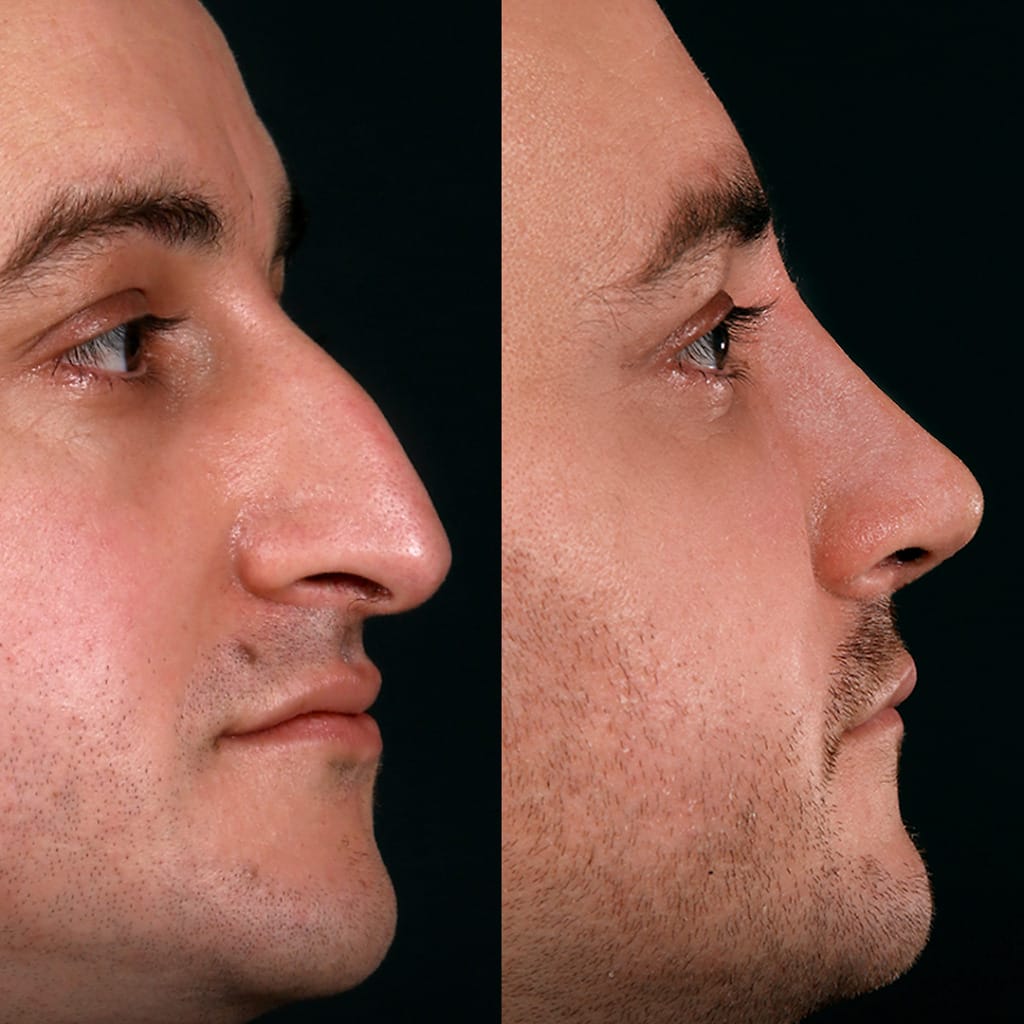
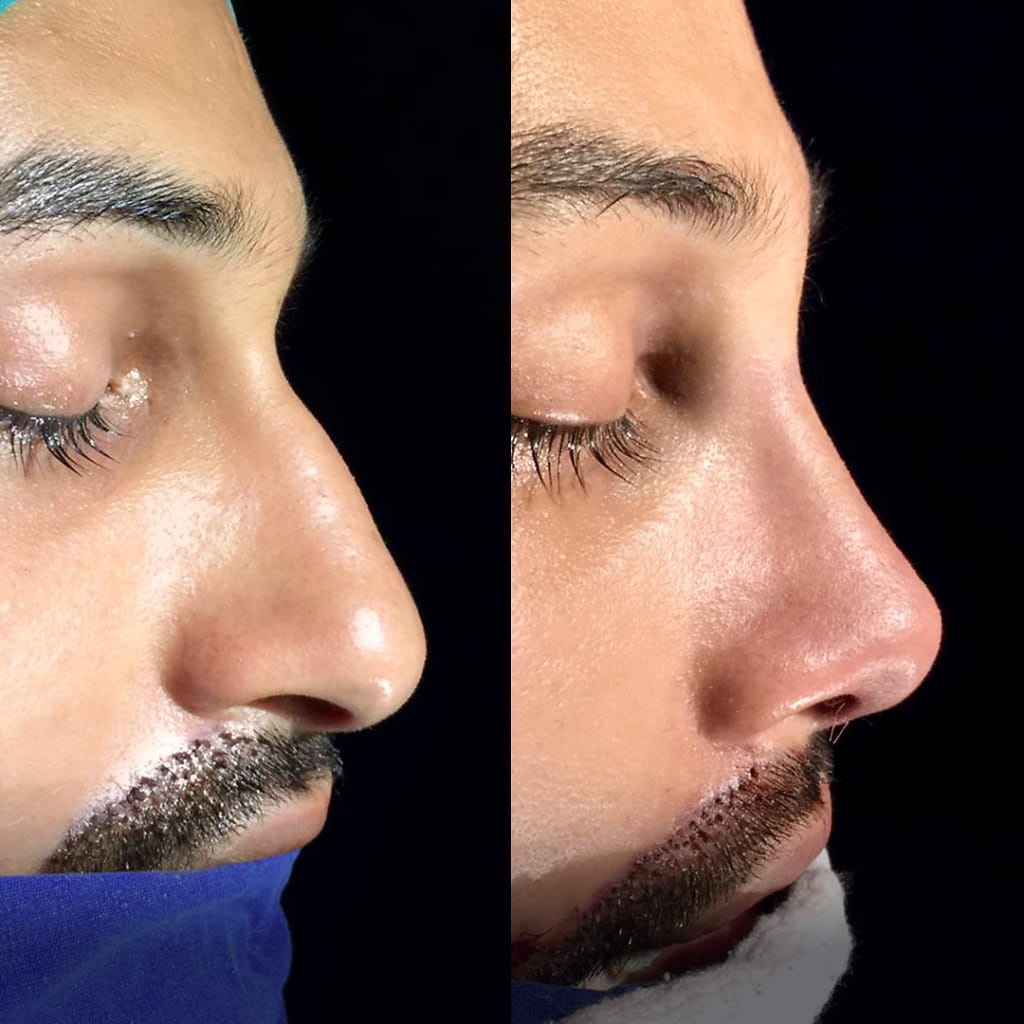
About male rhinoplasty
Unlike our female patients, the nasal bones in male patients should not be thinned. Although rhinoplasty techniques are the same for both men and women, the aesthetic goals and principles may differ.
In male noses, the nasal bridge is straight, and it is more appropriate for the tip of the nose to be at the same level as the nasal bridge. In fact, leaving a very slight arch on the nasal bridge in some patients will result in a more natural and aesthetically pleasing outcome.
In women, the ideal angle between the nose and the upper lip is 100–105 degrees. In men, however, this angle should not exceed 90–95 degrees. Reducing this angle creates an upturned nasal structure, which can result in a feminine appearance for male patients.